
Introduction
The genus Solidago L. includes approximately 127 species distributed across all continents. Of these, 105 species are native to Canada and the USA, 9 species occur in Mexico, and 11 species are present in South America, the Azores, Europe, and Asia [1]. In the flora of the Republic of Moldova, S. virgaurea (European goldenrod) grows spontaneously, while S. canadensis (Canadian goldenrod) is an adventive, cultivated species [2, 3]. According to the "Euro+Med PlantBase" database, in addition to S. virgaurea, its subspecies S. virgaurea subsp. taurica (Juz.) is also found in the wild flora of Moldova [4].
Aerial parts collected from both S. virgaurea and S. canadensis have been used since ancient times in the treatment of urinary tract diseases (nephrolithiasis, prostate disorders), while the leaves and flowers were employed to obtain natural brown and orange dyes [5, 6].
Although the pharmacotherapeutic potential of these plant species was largely overlooked for a long period, they are currently experiencing renewed interest and recognition within modern phytotherapy [5-7].
European goldenrod and Canadian goldenrod are two species widely studied for their rich phytochemical profiles, particularly in relation to phenolic compounds known for their antioxidant and anti-inflammatory properties [7, 8]. Over the years, research has shown that both species contain significant levels of flavonoids, phenolic acids, saponins, and essential oils (EO), which contribute to their therapeutic applications [9-19]. Key phenolic compounds identified inS. virgaureainclude rutin, quercetin, isoquercitrin, chlorogenic acid, and dicaffeoylquinic acids, whereas S. canadensis also contains high concentrations of similar compounds, with chlorogenic acid and rutin being dominant constituents [12-14]. These phenolics have demonstrated strong antioxidant activity through radical scavenging and metal-chelating assays [7, 12, 15]. In particular, isoquercitrin and chlorogenic acid contribute not only to antioxidant potential but also exhibit anti-inflammatory, cardioprotective, and chemopreventive effects [13-15]. It has been shown that the content and composition of phenolic compounds and EO can be influenced by the plant part analyzed and the extraction method used [16, 17]. These findings support the continued pharmacological interest in Solidago species and provide a scientific foundation for their use in herbal medicine and phytotherapy.
It should be noted that phytochemical and pharmacological studies on Solidago species from the flora of Moldova have not yet been conducted, although their relevance in the prophylaxis and treatment of urinary tract diseases is evident. Thus, the growing interest in Solidago species as medicinal plants, along with the limited research on S. virgaurea and S. canadensisin our country, served as the motivation for conducting this comprehensive pharmacognostic study.
Material and methods
Plant material for phytochemical and pharmacological studies. Plants of Solidago species served as biological material: S. virgaurea – collected from the spontaneous flora of the Trebujeni Landscape Reserve (47°19′36″N, 28°57′24″E), Orhei district, and S. canadensis – from the collection of the Scientific-Practical Center in the Domain of Medicinal Plants (SPCDMP) of Nicolae Testemitanu State University of Medicine and Pharmacy (46°54′06″N, 28°40′05″E). Aerial parts of the plants (consisting of fragments of stems, leaves, and inflorescences) collected during the flowering period between 2019 and 2024 were used for this study: Solidaginis virgaureae herba and Solidaginis canadensis herba. The vegetal products were dried under natural conditions in well-ventilated, dry, and dark rooms and stored in paper bags.
Plant material for macro- and microscopic studies. Fresh and dried plant organs were used: rhizomes and roots, stems, leaves, flowers, and fruits were harvested during the flowering period between 2018 and2020.
Dry extract preparation. The dried aerial parts were shredded using a grinder, and the powder was sieved through a 0.5 mm pore sieve. The extracts were obtained by the fractional maceration method with 60% ethyl alcohol for 30 minutes of continuous stirring. The extracts were filtered through Whatman No. 2 paper under vacuum using a Büchner funnel. The same procedure was repeated 5 times until maximum exhaustion. The obtained extracts were concentrated at 40 °C using the Laborota 4011 rotary evaporator [20].
Macro- and microscopic assay. The macroscopic study was based on the following indicators: plant height, rhizome morphology (shape, color, surface, and fracture relief), stem morphology (shape, color, surface, and fracture relief), leaf morphology (type, presence or absence of petiole, arrangement on the stem, leaf size, and lamina configuration), inflorescence morphology (type, size, and color), and fruit morphology (type, shape, and size). The microscopic analysis was conducted on clarified (with chloral hydrate or 3% NaOH) superficial preparations of the leaves and flowers, and on cross-sections of the leaf lamina, stem, and rhizome, using the Micros binocular optical microscope at 4x, 10x, and 40x objective magnification [20-22].
Extraction of essential oil (EO). EO were extracted by hydro-distillation using a NeoClevenger extractor from fresh aerial parts (stems, leaves, and inflorescences) collected at the full bloom stage [23].
Qualitative identification of active principles. The qualitative chemical study was performed using color and sedimentation reactions for flavonoids and saponins [20, 24], and the individual components of the EO were identified by gas chromatography-mass spectrometry (GC-MS), comparing the unique mass spectral fragmentation patterns of each peak with the mass spectral computer library database (NIST MS Search 2.2) and relevant references [23, 25].
Spectrophotometric assay of phenolic compounds. The ultraviolet-visible (UV-VIS) spectrophotometric analysis of total polyphenolic compounds, flavonoids, and hydroxycinnamic acids in the dry extracts of Solidago species was carried out using the Metertech UV/VIS SP 8001 spectrophotometer. The total content of polyphenols was determined by 2 Folin-Ciocalteau methods (FC1 and FC2), expressed in terms of gallic acid at 760 nm [26, 27]. The flavonoid content was determined relative to rutin after a reaction with aluminium chloride at 412 nm [28]. The quantitative determination of hydroxycinnamic acids was performed relative to caffeic acid after a reaction with Arnow’s reagent (sodium molybdate and sodium nitrite) at 500 nm [24]. was All experiments were repeated three times for statistical validity.
Spectrophotometric assay of saponins. The total saponin content was determined using the vanillin-sulfuric acid assay in correlation with a standard saponin solution at 540 nm [29].
Spectrophotometric assay of carotenoid pigments. The total carotenoid content was measured at a wavelength of 448 nm [30].
GC-MS of EO. The obtained EO were diluted in hexane (1:100) and analyzed using an Agilent Series GC-MS system, consisting of a GC 7890B gas chromatograph and an MS 5977A mass spectrometer. The capillary column used was HP-5MS Ultra Inert (30 m x 0.25 mm x 0.25 μm). The temperature program was: 50 °C for 8 min, then heated to 280 °C at 4 °C/min. The carrier gas was helium (1 mL/min), and the injection volume was 3 μL with a 50:1 split ratio [23, 25].
Antioxidant activity. To assess antioxidant activity, two complementary in vitro chemical methods were used: ABTS (2,2'-azino-bis(3-ethylbenzothiazoline-6-sulfonic acid)) assay and the Ferrozine Test (assay of iron-binding antioxidant capacity) [31].
Anti-inflammatory activity. The anti-inflammatory activity of Solidago extracts was evaluated in mice using a xylene-induced ear edema model and in rats using a carrageenan-induced paw edema model. Data were analyzed by one-way ANOVA with Bonferroni post-hoc test [32].
Antibacterial activity. The antibacterial activity was determined using the serial dilution method in liquid nutrient medium (2% peptone meat broth, pH = 7.0). Staphylococcus aureus (t. 209, ATCC 25923), Enterococcus faecalis (ATCC 19433), Escherichia coli (ATCC 25922), Klebsiella pneumoniae (ATCC 3534/51), and Pseudomonas aeruginosa (ATCC 27853) were used as reference cultures [33].
Statistical analysis. All tests were performed in triplicate, and statistical processing of the obtained data was carried out using MS Excel 2021. Variational statistics were applied to calculate the arithmetic mean ± standard deviation (SD).
Results
Macro- and microscopic study
Species of the genus Solidago share common characteristics: they are rhizomatous perennials that develop simple, alternate, ovate-lanceolate leaves with entire blades. The plants form calathidia clustered in simple or paniculate racemes, with ligulate, yellow, female, marginal flowers, while the central ones are tubular and bisexual. The fruits are cylindrical achenes provided with a pappus formed of seriate bristles [2, 8, 10]. At the same time, there are also distinctive morphological criteria for each species. The main specific macroscopic characters for the differentiated identification of vegetal products of the analysed Solidago species were established using dried, shredded aerial parts (fragments of stems, leaves, inflorescences, and separated flowers), according to several criteria, as illustrated in the following table (Table 1) [2, 22].
Table 1. Specific macroscopic characters for vegetal products of Solidago species | ||||
Specific macroscopic characters | Vegetal product | |||
Solidaginis virgaureae herba | Solidaginis canadensis herba | |||
Stem | Cross-section contour | pentagonal | circular | |
Color | External surface | light green | dark green | |
Internal surface | whitish-green | light green | ||
Diameter, cm | 0.5-1.0 | 0.4-0.7 | ||
Leaf | Shape | ovate-elliptic, toothed margin | elongated-lanceolate, serrate margin | |
Color | light green | dark green | ||
Size (cm) | Length | 0.8-1.2 | 0.9-2.2 | |
Width | 0.2-0.5 | 0.2-0.3 | ||
Inflorescence | Type | erect raceme + calathidium | pyramidal raceme + calathidium | |
Calathidium diameter (cm) | 1.0-1.5 | 0.5-0.6 | ||
Flower length | Ligulate | 0.8-1.2 | 0.3-0.5 | |
Tubular | 0.2-0.3 | 0.2-0.4 | ||
Microscopic techniques were used to identify the main anatomical features, and specific chemical reagents were applied to highlight the structural composition. Based on these observations, the most relevant microscopic characters were selected to ensure the reliable identification of Solidaginis virgaureae herba and Solidaginis canadensis herba (Table 2) [21, 22]. This anatomical study revealed distinct structural markers that serve as key diagnostic traits for differentiating S. virgaurea and S. canadensis within the flora of Moldova.
Table 2. Specific microscopic characters of vegetal products for Solidago species | |||
Specific microscopic characters | Vegetal product | ||
Solidaginis virgaureae herba | Solidaginis canadensis herba | ||
Stem | Cross-section contour | pentagonal | circular |
Secretory tissue | secretory channels | secretory channels | |
Leaf blade | Anatomical type | dorsoventral mesophyll; amphistomatic leaf | equifacial mesophyll; amphistomatic leaf |
Epidermis |
|
| |
Ligulate/tubulate flowers | Epidermis | rectangular cells with thin walls | rectangular cells with thin walls |
Pappus | multiseriate, non-branched bristles | multiseriate, branched bristles | |
Phytochemical studies
Qualitative analysis of active compounds. The qualitative comparative analysis of flavonoids and saponins were carried out using specific color and sedimentation reactions, with the observation of characteristic analytical effects, as summarized in the tables below (Table 3) [18, 19].
Table 3. Qualitative comparative analysis of flavonoids and saponins in Solidaginis virgaureae herba and Solidaginis canadensis herba | ||||||
Qualitative analysis of flavonoids | ||||||
No | Vegetal product | Shinoda test (Zn + HCl solution) | NaOH solution (10%) | Lead acetate solution (2%) | Vanillin solution (1%) in concentrated HCl | |
1 | Solidaginis virgaureae herba | pale-pink strong effervescence
| yellow-orange, weak precipitate |
yellowish-white precipitate
| green color, intensity decreases | |
2 | Solidaginis canadensis herba | pale-pink, weak effervescence
| yellow-orange, weak precipitate |
yellowish-white opalescence
| yellow color, intensity decreases | |
Qualitative analysis of saponins | ||||||
No | Vegetal product | Foaming reaction | Lead acetate solution | Liebermann-Burchard test | Lafon test | |
HCl solution | NaOH solution | |||||
1 | Solidaginis virgaureae herba | moderate foam | intense foam | white-pink precipitate | negative reaction | dark greenish-blue color |
2 | Solidaginis canadensis herba | moderate foam | intense foam | yellowish opalescence | negative reaction | dark greenish-blue color |
Note: The table illustrates the specific analytical effects observed in identification reactions for flavonoids and saponins in the vegetal products Solidaginis virgaureae herba and Solidaginis canadensis herba. Abbreviation: No – number. | ||||||
Gas chromatography-mass spectrometry analysis of EO extracted from fresh aerial parts of Solidago species revealed the presence of 51 chemical constituents in the essential oil of S. canadensis and 37 components in that of S. virgaurea (Fig. 1). The compounds common to both Solidago EO include: α-pinene, camphene, sabinene, β-pinene, β-myrcene, limonene, trans-β-ocimene, terpinolene, borneol, bornyl acetate, γ-elemene, β-elemene, β-caryophyllene, aromadendrene, α -humulene, γ-muurolene, germacrene D, caryophyllene oxide, and phytol. In contrast, some compounds were species-specific, with linalool detected only in S. canadensis EO and geraniol identified exclusively in S. virgaurea EO (Table 4).
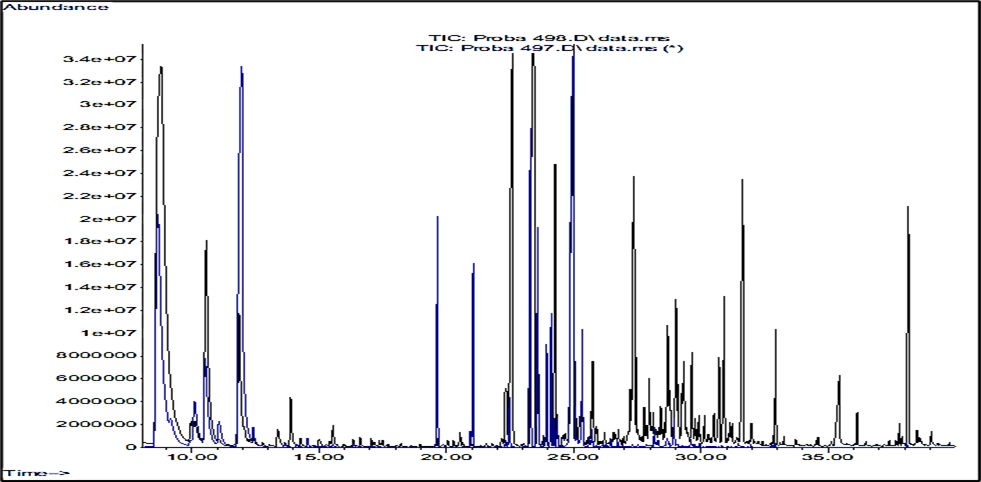 |
Fig. 1 Chromatogram of S. canadensis (sample 497) and S. virgaurea (sample 498) EO. Note: The chromatogram shows the peaks of the separated compounds from the EO of S. canadensis (blue color) and S. virgaurea (black color). |
Quantitative analysis of active compounds. The total content of polyphenols in Solidago extracts was determined by 2 Folin-Ciocalteau techniques (FC1 and FC2). There are significant differences between the extracts of the analyzed species and between the FC method techniques, in terms of total polyphenol content (FC1: S. virgaurea – 74.01, S. canadensis – 96.40 mg GAE/g DW; FC2: S. virgaurea – 44.10, respectively S. canadensis – 69.37 mg GAE/g DW). In the dry extracts of S. canadensis, the values of total polyphenol content by both FC techniques are higher than in S. virgaurea. The FC1 technique allowed the quantification of a higher concentration of polyphenols for both Solidago species (Fig. 2).
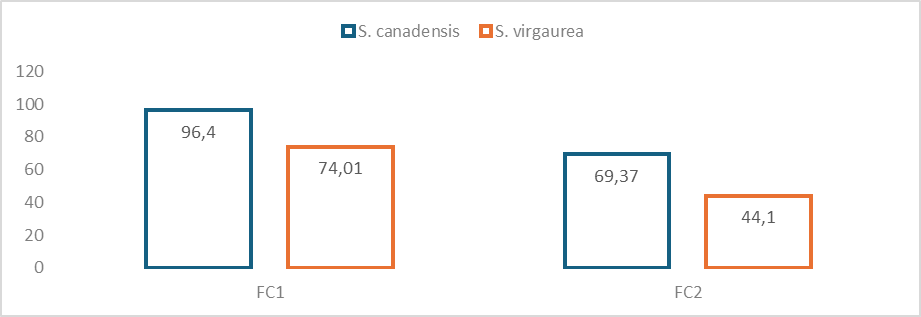 |
Fig. 2 The total content of polyphenols in Solidago extracts by two Folin-Ciocalteu (FC1 and FC2) techniques (mg GAE/g DW). Note: The diagram represents the total phenolic content expressed in mg GAE/g DW in Solidago extracts; the blue columns – S. canadensis, the orange ones – S. virgaurea. Variational statistics were applied using MS Excel 2021, and the presented data represent the arithmetic mean of 3 determinations; standard deviations (SD) are as follows: S. canadensis (FC1) – 0.0028; S. virgaurea (FC1) – 0.00047; S. canadensis (FC2) – 0.0010; S. virgaurea (FC2) – 0.00057. |
The spectrophotometric determination of flavonoids (Fig. 3), in terms of rutin (RE), revealed a higher content of flavonoids in the dry extract of S. canadensis (66.4 mg RE/g DW) compared to that of S. virgaurea (21.3 mg RE/g DW) [34].
The comparative total content of hydroxycinnamic acids (HA), determined by the Arnow spectrophotometric method and expressed as caffeic acid equivalents, showed a concentration of 27 g/100 g DW for the S. canadensis extract and 12 g/100 g DW for the S. virgaurea extract (Fig. 4) [35].
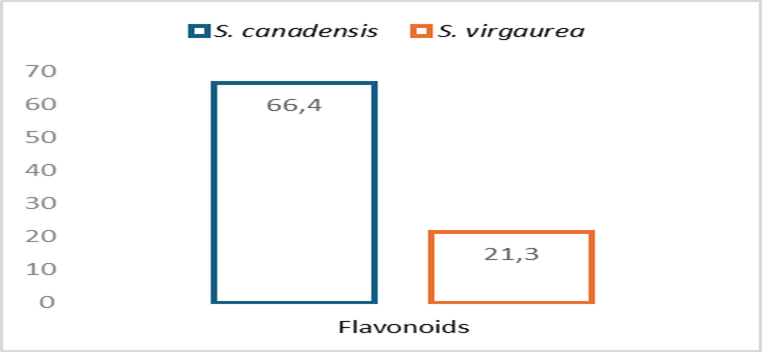 |
Fig. 3 Total flavonoid content in Solidago extracts (mg RE/g DW). Note: The diagram represents the total flavonoid content expressed in mg RE/g DW in Solidago extracts.Blue columns – S. canadensis, orange columns – S. virgaurea. Variational statistics were performed using MS Excel 2021. Data represent the arithmetic mean of 3 determinations. Standard deviations (SD) are: S. canadensis – 0.0256; S. virgaurea – 0.0425. |
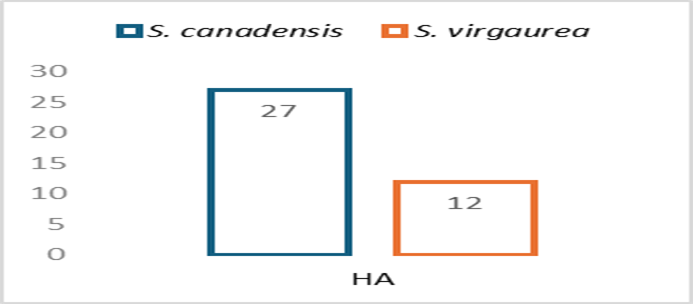 |
Fig. 4 Total content of HA in Solidago extracts (g/100 g DW). Note: The diagram represents the total HA content expressed in g/100 g DW in Solidago extracts. Blue columns – S. canadensis, orange columns – S. virgaurea. Variational statistics were performed using MS Excel 2021. Data represent the arithmetic mean of 3 determinations. Standard deviations (SD) are: S. canadensis – 0.0146; S. virgaurea – 0.0049. |
Comparative quantitative analysis of saponins (Fig. 5) showed that the dried extract of S. canadensis aerial parts contains a higher saponin content (500 mg SE/g DW) compared to the extract of S. virgaurea aerial parts (452 mg SE/g DW) [34, 36].
For the spectrophotometric determination of carotenoid pigments (Fig. 6), the following values were obtained: S. canadensis – 0.285 mg βCE/g DW, and S. virgaurea – 0.258 mg βCE/g DW [34].
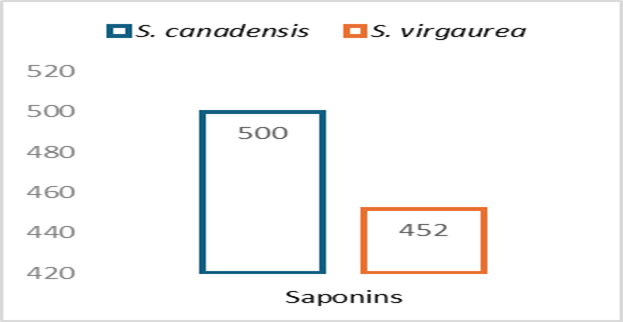 |
Fig. 5 Total content of saponins in Solidago extracts (mg SE/g DW). Note: The diagram represents the total saponin content expressed in mg SE/g DW in Solidago extracts. Blue columns – S. canadensis, orange columns – S. virgaurea. Variational statistics were applied using MS Excel 2021, and the presented data represent the arithmetic mean of 3 determinations. Standard deviations (SD) are as follows: S. canadensis – 0.00057; S. virgaurea – 0.00069. |
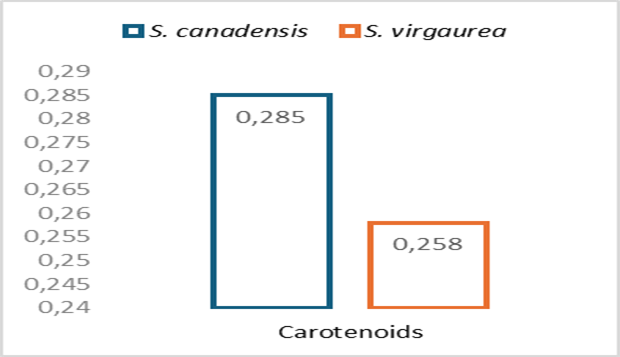 |
Fig. 6 Total content of carotenoids in Solidago extracts (mg βCE/g DW). Note: The diagram represents the total carotenoid content in Solidago extracts expressed in mg βCE/g DW. Blue columns – S. canadensis, orange columns – S. virgaurea. Variational statistics were calculated using MS Excel 2021. Data represent the arithmetic mean of 3 determinations. Standard deviations (SD) are: S. canadensis – 0.00054; S. virgaurea – 0.00071. |
Concerning the EO composition of the analyzed Solidago species, some compounds were common to both species but different in concentration (Table 4). In S. virgaurea, the predominant compound was α-pinene (28.8%), followed by β-caryophyllene (9.96%), β-elemene (8.29%), germacrene D (7.49%), β-myrcene (6.2%), caryophyllene oxide (4.24%), limonene (3.06%), and α-humulene (3.01%). Conversely, the EO of S. canadensis was mainly composed of limonene (22.81%), with other major constituents including germacrene D (19.73%), α-pinene (19.03%), β-caryophyllene (6.53%), β-myrcene (4.75%), β-ylangene (4.4%), and bornyl acetate (3.81%) (Table 4).
Table 4. Major chemical constituents in S. canadensis and S. virgaurea essential oil (EO) analyzed by gas chromatography-mass spectrometry (GC-MS). | |||||
No | Compounds | Solidago canadensis | Solidago virgaurea | ||
RT (min) | EO (%) | RT (min) | EO (%) | ||
1 | α-Pinene | 8.672 | 19.03 | 8.672 | 28.80 |
2 | Camphene | 9.163 | 2.28 | na | 0.00 |
3 | Sabinene | 9.947 | 0.24 | 9.947 | 0.49 |
4 | β-Pinene | 10.133 | 2.66 | 10.117 | 0.87 |
5 | β-Myrcene | 10.529 | 4.75 | 10.529 | 6.20 |
6 | Limonene | 11.972 | 22.81 | 11.861 | 3.06 |
7 | trans-β-Ocimene | 12.408 | 0.67 | 12.408 | 0.24 |
8 | Terpinolene | 13.645 | 0.10 | 13.645 | 0.07 |
9 | linalool | 14.105 | 0.06 | - | 0.00 |
10 | Borneol | 16.347 | 0.08 | 16.347 | 0.11 |
11 | Geraniol | - | 0.00 | 18.608 | 0.02 |
12 | Bornyl acetate | 19.656 | 3.81 | 19.656 | 0.10 |
13 | γ-Elemene | 20.938 | 0.25 | 20.938 | 0.08 |
14 | β-Eiemene | 22.485 | 0.80 | 22.610 | 8.29 |
15 | β-Caryophyllene | 23.309 | 6.53 | 23.447 | 9.96 |
16 | Aromandendrene | 24.117 | 1.96 | 24.117 | 0.73 |
17 | a-Humulene | 24.244 | 0.38 | 24.244 | 3.01 |
18 | γ-Muurolene | 24.350 | 0.51 | 24.350 | 0.32 |
19 | Germacrene D | 24.968 | 19.73 | 24.968 | 7.49 |
20 | Caryophyllene oxide | 27.303 | 0.05 | 27.357 | 4.24 |
21 | Phytol | 38.084 | 0.07 | 38.146 | 2.66 |
Note: The table represents the retention time (RT) expressed in minutes (min) and EO content, expressed in percentage (%), of the main compounds separated by GC-MS from S. canadensis and S. virgaurea EO. The abbreviations used in the table are as follows: No – number, RT – retention time, EO – essential oil, min – minutes. | |||||
Biological activities
The antioxidant activity (Fig. 7) determined by the ABTS assay revealed that leaf extracts from both Solidago species exhibited the highest antioxidant activity (44.17 μM TEAC for S. canadensis and 34.31 μM TEAC for S. virgaurea), followed by extracts from the aerial parts (39.32 μM TEAC and 33.25 μM TEAC, respectively), and then flower extracts (35.37 μM TEAC for S. canadensis and 30.92 μM TEAC for S. virgaurea). A comparative analysis using the iron-chelation antioxidant capacity assay showed minimal variation in the results for S. canadensis plant materials: the highest chelating ability was observed in the leaves (81.49%), followed by aerial parts (80.19%) and flowers (79.65%). A similar pattern was observed for S. virgaurea, with the highest activity in the leaves (80.19%), followed by aerial parts (79.55%) and flowers (79.01%) [34, 37].
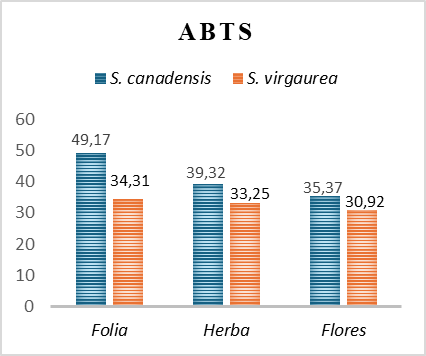 | 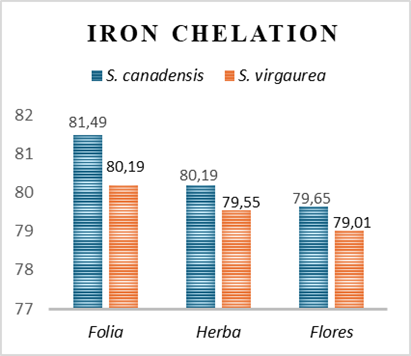 |
Fig. 7 Comparative antioxidant activity of dried extracts of S. canadensis and S. virgaurea, determined by ABTS method (μM TEAC) and iron-chelation test (%). Note: The diagram represents the comparative antioxidant activity of Solidago extracts (Folia – leaves, Herba – aerial parts, and Flores – flowers) using 2 in vitro methods (ABTS method, expressed in μM TEAC, and iron-chelation test, expressed in %), respectively: the blue columns – S. canadensis, the orange columns – S. virgaurea. Variational statistics were applied using MS Excel 2021, and the presented data represent the arithmetic mean of 3 determinations; standard deviations (SD) 2%. | |
The study of the anti-inflammatory activity of Solidago aerial parts extracts in the xylene-induced ear edema model in mice showed that, although insignificant compared to the control group, both diclofenac and Solidago extracts decreased xylene-induced ear edema. The decrease in edema was more evident with the use of the non-steroidal anti-inflammatory drug and less pronounced with the use of the investigated extracts. The percentage of edema inhibition with diclofenac was 20.38%, and with Solidago extracts – 11.99%. When evaluating the anti-inflammatory action of Solidago extracts in carrageenan-induced paw edema in rats, a tendency to decrease paw volume compared to the control group was observed, but it was not significant [19, 34].
Determination of the antibacterial activity of Solidago extracts was carried out by the serial dilution method in liquid nutrient medium. It was found that the bacteriostatic activity of the S. virgaurea aerial parts extract is within the concentration range of 75 µg /ml, and the bactericidal activity varies within the concentration range of 150–300 µg/mL, constituting against S. aureus (t. 209), E. faecalis (ATCC 19433), P. aeruginosa (ATCC 27853), and K. pneumoniae (ATCC 3534/51) – 150 µg/ml, and against E. coli (ATCC 25922) – 300 µg/mL (Fig. 8).
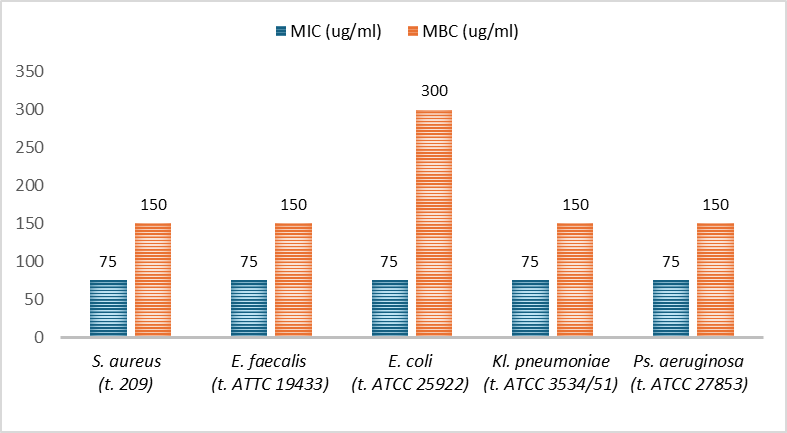 |
Fig. 8 Antibacterial activity of S. virgaurea extract (MIC (µg/ml) – minimum inhibitory concentration, MBC (µg/ml) – minimum bactericidal concentration). Note: The diagram represents the antibacterial activity of S. virgaurea extract on different bacterial strains (S. aureus, E. faecalis, E. coli, K. pneumoniae, P. aeruginosa). The blue columns show MIC, expressed inµg/ml, while the orange ones – MBC, expressed in µg/ml. |
The bacteriostatic activity of the S. canadensis aerial parts extract varies within the concentration range 75 µg/ml – 150 µg/ml and constitutes against P. aeruginosa (ATCC 27853) – 75 µg /ml, and against the other investigated bacterial cultures – 150 µg /ml. The bactericidal activity varies within the concentration range 150 µg/ml – 300 µg/ml, and constitutes against S. aureus (209), E. faecalis (ATCC 19433), P. aeruginosa (ATCC 27853) – 150 µg/ml, and against E. coli (ATCC 25922) and K. pneumoniae (ATCC 3534/51) – 300 µg/ml (Fig. 9) [34].
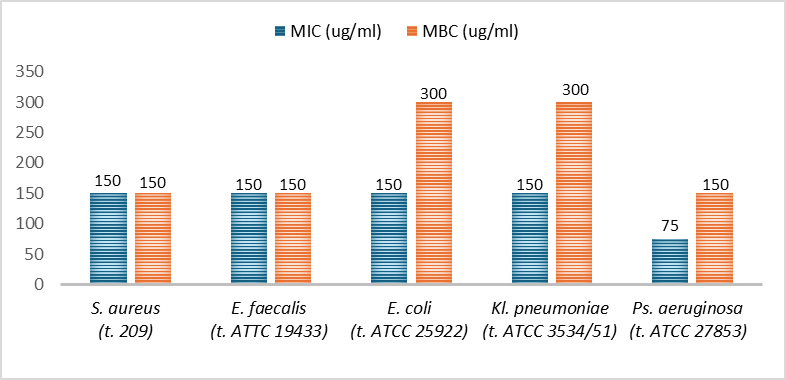 |
Fig. 9 Antibacterial activity of S. canadensis extract (MIC (µg/ml) – minimum inhibitory concentration, MBC (µg/ml) – minimum bactericidal concentration). Note: The diagram represents the antibacterial activity of S. canadensis extract on different bacterial strains (S. aureus, E. faecalis, E. coli, K. pneumoniae, P. aeruginosa). The blue columns show MIC, expressed in µg/ml, while the orange ones – MBC, expressed in µg/ml. |
Discussion
This is the first comprehensive comparative study that focused on the biology, macro- and microscopic study, phytochemistry, and main pharmacological activities of Solidago species from the flora of Moldova.
Similar studies have been carried out in several European countries, including Romania, Estonia, Bulgaria, Slovenia, Hungary, and Lithuania [9, 10, 12-17, 23, 38, 39]. Our results are in agreement with the majority of the evaluated studies, and we note that there is currently an increasing emphasis on the study of S. canadensis for its valorization for both economic and pharmaceutical purposes.
The key distinctive macroscopic features used to differentiate the plant materials of Solidago species were identified by examining the dried, shredded aerial parts – including stem, leaf, inflorescence, and individual flower fragments. Also, the distinct structural characteristics with diagnostic significance have been determined: the presence of secretory channels in both the rhizome and stem of both species; the stem's cross-sectional shape (polygonal in S. virgaurea, circular in S. canadensis); differences in leaf mesophyll (dorsoventral in S. virgaurea, equifacial in S. canadensis); anomocytic stomata in both species; multicellular protective trichomes of conical and flabelliform types present in both; secretory trichomes differing in structure (with a unicellular base in S. virgaurea and a multicellular base in S. canadensis); and finally, both species exhibit abundant pappus made of multiseriate bristles and spherical pollen grains [21, 22]. We note that the same mesophyll structure, and specifically multicellular conical and flabelliform trichomes, have also been mentioned by other researchers in Solidago species [10, 40].
In most scientific studies, the main researched group of chemical compounds in Solidago species are the phenolic ones. This is not by chance, but due to the fact that they are primarily responsible for the antioxidant and anti-inflammatory activities. Our results show a higher content of polyphenols, including the total polyphenols, flavonoids, and hydroxycinnamic acids in the dried extracts of S. canadensis, compared to that of S. virgaurea, which is also in agreement with other studies [10, 12, 13, 15]. One Romanian research attempts to explain the higher content of phenolic compounds in S. canadensis than S. virgaurea, based on specific ecological factors and geographical origin that could influence the accumulation of these chemical compounds [10].
Comparative phytochemical studies have demonstrated significant qualitative and quantitative differences in the flavonoid and phenolic acid profiles of these species [13-16, 41, 42]. In S. virgaurea, the predominant flavonoids include rutin, quercetin, isoquercitrin, and kaempferol derivatives, which are mainly localized in the aerial parts of the plant [12-13]. In contrast,S. canadensis is characterized by a distinct profile, with high concentrations of chlorogenic acid and rutin, along with various glycosylated flavonoids such as hyperoside and quercitrin [15]. Also, a recent Ukrainian study has demonstrated that the high flavonoid content in S. canadensis, especially rutin, is closely correlated with the mechanism of invasiveness, being an important element of the strategy for the development and biotransformation of a new habitat [41]. Of particular note is that, for the first time, in Lithuania, analyses of phenolic acids and flavonoids have been conducted on Solidago × niederederi Khek, an interspecific hybrid between S. canadensis and S. virgaurea, in order to assess its phytochemical profile and potential pharmacological relevance [42].
The presence of carotenoid pigments enhances the pharmacological potential ofSolidago species and supports their use in antioxidant therapies, in particular being investigated as a supporting treatment in cancer [43]. Our results indicate that S. canadensis is richer in carotenoid pigments, but we did not identify their individual components. It should be noted that in other studies, individual carotenoid pigments have been isolated, and those characteristic for each Solidago species were found: S. virgaurea is characterized by a higher content of β-carotene and lutein in its inflorescences, whereas S. canadensistends to accumulate more xanthophylls, particularly zeaxanthin, in both aerial parts and flowers [43, 44].
Saponins are another important class of biologically active compounds specific to Solidago species, due to the therapeutic effects they impart, in particular diuretic and antimicrobial properties [5, 7]. Also, it was revealed that triterpenoid saponins extracted from the aerial parts of S. virgaurea have shown inhibition of the yeast-to-hyphae transition in Candida albicans infection [45].
However, studies on saponins are still limited to date. The present qualitative determination of saponins demonstrated the presence of triterpene saponosides and the absence of steroid ones in the vegetal products of Solidago species. Our comparative quantitative saponin analysis shows that S. canadensis contains a higher content of saponins (500 mg SE/g DW), in contrast to S. virgaurea (452 mg SE/g DW) [34, 36].
Our GC-MS analysis of EO reveals a significant resemblance in the EO composition of both Solidago species, especially due to the prominent presence of α-pinene, which appears in greater amounts in S. virgaurea. Additionally, monoterpenes and sesquiterpenes were identified as the predominant hydrocarbon classes in the oils of both species, as illustrated in other studies [23, 38]. A notable distinction in our analysis lies in the limonene content – found in high concentrations in S. canadensis, but only in minor amounts in S. virgaurea. Also, pinene and limonene have been mentioned among the main constituents of S. canadensisEO in previous studies [38].
This study confirmed that all tested Solidago extracts possess strong antioxidant properties; however, S. canadensis extracts showed a more pronounced antioxidant action compared to those of S. virgaurea, as reported in other previous studies [12, 15]. Notably, leaf extracts showed significantly higher antioxidant activity in both analytical methods used. These findings are consistent with the results reported in one of the latest scientific papers from Croatia [46].
The antibacterial activity of Solidago species has been the subject of several studies, providing insight into their potential as sources of new natural antimicrobial agents. Our study revealed that both Solidago extracts showed bactericidal activity between 150–300 µg/mL, while bacteriostatic activity on several bacterial strains was more pronounced at lower concentrations for S. virgaurea extract (75 µg/mL). These findings are also consistent with other studies and highlight the moderate variation in antimicrobial potency between these two species [23, 47].
Both Solidago species have demonstrated anti-inflammatory effects in various in vitro and in vivo models, showing efficacy in reducing inflammation associated with chronic conditions such as arthritis, oxidative stress, and tissue damage [39, 47-49]. This study of the anti-inflammatory activity in 2 in vivo models demonstrated a mild anti-inflammatory action for both Solidago species. According to some authors [39, 46], the anti-inflammatory properties of S. canadensis extracts are attributed to both their phenolic compounds and EO. Also, in a rat model using carrageenan-induced edema,S. virgaurea extract demonstrated an anti-exudative effect, and both its aqueous and ethanolic extracts have been shown to reduce paw swelling and arthritic inflammation in rats [48]. Additionally, hydroalcoholic extracts of S. virgaureahave been found to inhibit dihydrofolate reductase, further supporting their anti-inflammatory potential [49].
Although the current study provides valuable comparative data, further investigations are required to assess the bioavailability, pharmacokinetics, and standardization of active compounds.
Conclusion
The study established clear diagnostic criteria for differentiating Solidago virgaurea and Solidago canadensis from the Moldovan flora. Comparative phytochemical and pharmacological analyses revealed that these species are rich in biologically active compounds with antioxidant, anti-inflammatory, and antibacterial properties. S. canadensis demonstrated a higher content of active principles and greater therapeutic potential, supporting its further investigation for pharmaceutical and nutraceutical applications.
Competing interests
None declared.
Authors’ contributions
Conception and design of the work – TC and LU; acquisition of data, experimental part – CF, VI; analysis and interpretation of data – CF, VI, TC, and LU; drafting the article – CF; reviewing the article – LU, TC. All authors revised and approved the final version of the manuscript.
Acknowledgements and funding
The study was carried out with funding from: S/Project code 080301 „Elaboration, analysis, standardization and quality control of pharmaceutical products and monocomponent and combination of synthetic and natural food supplements”; Grant of the Ministry of Research, Innovation and Digitization, CNCS-UEFISCDI, project number PN-IV-P8-8.3-ROMD-2023-0307, within PNCDI IV.
We thank the Department of Pharmacognosy and Pharmaceutical Botany and the Drug Development Center, Scientific Laboratory „Intrahospital Infections”, Discipline of Epidemiology, Drug Development Center of Nicolae Testemitanu State University of Medicine and Pharmacy, and Research Center for Studies of Food Quality and Agricultural Products, University of Agronomic Sciences and Veterinary Medicine (USAMV) of Bucharest, Romania, for their support in carrying out this study.
Informed consent for publication
Not needed for this study.
Ethics approval
The study protocol was approved by the Research Ethics Committee of the Nicolae Testemițanu State University of Medicine and Pharmacy (minutes no. 36, dated 30.05.2019).
Provenance and peer review
Not commissioned, externally peer-reviewed.
Authors’ ORCID IDs
Cornelia Fursenco – https://orcid.org/0000-0003-0692-6819
Violeta Alexandra Ion: https://orcid.org/0000-0002-5158-5454
Tatiana Calalb – https://orcid.org/0000-0002-8303-3670
Livia Uncu – https://orcid.org/0000-0003-3453-2243
References
Beck JB, Semple JC, Brull JM, Lance SL, Phillips MM, Hoot SB, Meyer GA. Genus-wide microsatellite primers for the goldenrods (Solidago; Asteraceae). Appl Plant Sci. 2014;2(4):1300093. doi: 10.3732/apps.1300093.
Fursenco C, Calalb T. Biologia speciei Solidago virgaurea L. din flora Republicii Moldova. [Biology of Solidago virgaurea L. species from the flora of the Republic of Moldova]. In: Proceedings of the scientific conference with international participation "Ethical pharmacy: history, realities and prospects", 2018 Apr 19-21, Chisinau, Republic of Moldova. Chișinău; 2018. p.190-196. Romanian.
Fursenco C, Calalb T. Species of g. Solidago L. in the flora of the Republic of Moldova. Acta Medica Marisiensis. 2018;64(Suppl 3):21. Abstracts of Scientific Aniversary Symposium - 70 years from foundation of University Botanical Garden, Tîrgu-Mureş 1948-2018; 2018 May 30 - June 1; Tîrgu Mureș, Romania.
Greuter W. Compositae (pro parte majore). In: Greuter W, von Raab-Straube E, editors. Euro+Med Plantbase – the information resource for Euro-Mediterranean plant diversity; 2006.
Melzig MF. [Goldenrod – a classical exponent in urological phytotherapy]. Wien Med Wochenschr. 2004;154(21-22):523-7.doi: 10.1007/s10354-004-0118-4. German.
Suleymanova FS, Nesterova OV, Matyushin A. Istoricheskii opyt i perspektivy ispol'zovaniia travy zolotarnika kanadskogo (Solidago canadensis L.) v meditsine [The historical background and prospects of Canadian goldenrod (Solidago canadensis L.) herb medicinal use]. J Sci Artic Health Educ Millenn. 2017;19(4):142-9. doi: 10.26787/nydha-2226-7425-2017-19-4-142-149. Russian.
Apáti P, Szentmihályi K, Kristó ST, Papp I, Vinkler P, Szoke É, Kéry Á. Herbal remedies of Solidago – correlation of phytochemical characteristics and antioxidative properties. J Pharm Biomed Anal. 2003;32(4-5):1045-53.doi: 10.1016/s0731-7085(03)00207-3.
Fursenco C, Calalb T, Uncu L, Dinu M, Ancuceanu R. Solidago virgaurea L.: a review of its ethnomedicinal uses, phytochemistry, and pharmacological activities. Biomolecules. 2020;10(12):1619. doi: 10.3390/biom10121619.
Toiu A, Vlase L, Vodnar DC, Gheldiu AM, Oniga I. Solidago graminifolia L. Salisb. (Asteraceae) as a valuable source of bioactive polyphenols: HPLC profile, in vitro antioxidant and antimicrobial potential. Molecules. 2019 Jul 23;24(14):2666. doi: 10.3390/molecules24142666.
Dobjanschi L, Fritea L, Patay EB, Tamas M. Comparative study of the morphological and phytochemical characterization of Romanian Solidago species. Pak J Pharm Sci. 2019;32(4):1571-9.
Fursenco C, Balova O, Calalb T. Potențialul terapeutic al compușilor fenolici din speciile genului Solidago. [Therapeutic potential of phenolic compounds from Solidago species]. Mold J Health Sci. 2024;11(3 Suppl 2):734. Abstracts of annual scientific conference “Biomedical and health research: quality, excellence and performance”; 2024 Oct 16-18; Chisinau, Republic of Moldova. Romanian. English.
Woźniak D, Ślusarczyk S, Domaradzki K, Dryś A, Matkowski A. Comparison of polyphenol profile and antimutagenic and antioxidant activities in two species used as source of Solidaginis herba – goldenrod. Chem Biodivers. 2018 Apr;15(4):e1800023. doi: 10.1002/cbdv.201800023.
Thiem B, Wesołowska M, Skrzypczak L, Budzianowski J. Phenolic compounds in two Solidago L. species from in vitro culture. Acta Pol Pharm. 2001 Jul-Aug;58(4):277-81.
Rosłoń W, Osińska E, Mazur K, Szprych A. Chemical characteristics of European goldenrod (Solidago virgaurea L. subsp. virgaurea) from natural sites in central and eastern Poland. Acta Sci Pol Hortorum Cultus. 2014;13(1):55-65.
Uzelac Božac M, Poljuha D, Dudaš S, Bilić J, Šola I, Mikulič-Petkovšek M, Sladonja B. Phenolic profile and antioxidant capacity of invasive Solidago canadensis L.: potential applications in phytopharmacy. Plants. 2025;14(1):44. doi: 10.3390/plants14010044.
Kraujalienė V, Pukalskas A, Venskutonis PR. Biorefining of goldenrod (Solidago virgaurea L.) leaves by supercritical fluid and pressurized liquid extraction and evaluation of antioxidant properties and main phytochemicals in the fractions and plant material. J Funct Foods. 2017;37:200-208. doi: 10.1016/j.jff.2017.07.049.
Malićanin M, Karabegović I, Đorđević N, Mančić S, Stojanović SS, Brković D, Danilović B. Influence of the extraction method on the biological potential of Solidago virgaurea L. essential oil and hydrolates. Plants (Basel). 2024 Aug 7;13(16):2187. doi: 10.3390/plants13162187.
Fursenco C, Calalb T, Uncu L. The phytochemical profile of Solidago species from the Republic of Moldova flora. In: 20th International Symposium and Summer School on Bioanalysis, 2022 Jun 24-30; Pécs, Hungary: Book of abstracts. Pécs; 2022. p. 38.
Fursenco C. Cercetarea compușilor chimici din produsele vegetale și extractive ale speciilor genului Solidago din flora Republicii Moldova = Research of chemical compounds from vegetal and extractive products of Solidago species from the Republic of Moldova flora. In: [Proceedings of the 10th Congress of pharmacists from the Republic of Moldova with international participation "Faculty of Pharmacy – six decades of innovation and progress"; 2024 Nov 22-23; Chisinau: Abstract book]. Chișinău; 2024. p. 310-312. Romanian, English.
Nistreanu A, Calalb T. Analiza farmacognostică a produselor vegetale medicinale. [Pharmacognostic analysis of medicinal plant products]. Chișinău: Medicina; 2016. 316 p. Romanian.
Calalb Т, Fursenco C, Ionita O, Ghendov V. The morpho-anatomical study of Solidago virgaurea L. species from the flora of the Republic of Moldova. East Eur Sci J. 2018;2(30):4-13.
Fursenco C, Calalb T, Uncu L. Comparative microscopic study of Solidago species from the Republic of Moldova flora. Mold Med J. 2020;63(3):16-21. doi: 10.5281/zenodo.3958433.
Elshafie HS, Gruľová D, Baranová B, Caputo L, De Martino L, Sedlák V, et al. Antimicrobial activity and chemical composition of essential oil extracted from Solidago canadensis L. growing wild in Slovakia. Molecules. 2019;24(7):1206. doi:10.3390/molecules24071206.
Oniga I, Benedec D, Hanganu D, Toiu A. Metode de analiză farmacognostică a produselor vegetale medicinale. [Methods of pharmacognostic analysis of medicinal plant products]. Vol. 2. Cluj-Napoca: Editura Medicală Universitară “Iuliu Hațieganu”; 2023. 205 p. Romanian.
Babushok VI, Linstrom PJ, Zenkevich IG. Retention indices for frequently reported compounds of plant essential oils. J Phys Chem Ref Data. 2011;40(4):043101. doi: 10.1063/1.3653552.
Shanaida M, Golembiovska O, Hudz N, Wieczorek PP. Phenolic compounds of herbal infusions obtained from some species of the Lamiaceae family. Curr Issues Pharm Med Sci. 2018;31(4):194-199. doi: 10.1515/cipms-2018-0036.
Ion VA, Nicolau F, Petre A, Bujor OC, Badulescu L. Variation of bioactive compounds in organic Ocimum basilicum L. during freeze-drying processing. Sci Pap Ser B Hortic. 2020;64(1):397-404.
Pravbivtseva OE, Kurkin BA. Issledovaniia po obosnovaniiu novykh podkhodov k standartizatsii syr'ia i preparatov zveroboia prodyriavlennogo [Studies on the justification of new approaches to the standardization of St. John's wort raw materials and preparations]. Khim Rastit Syrya. 2008;(1):81-6. Russian.
Du M, Guo S, Zhang J, Hu L, Li M. Quantitative analysis method of the tea saponin. Open J For. 2018;8(1):61-7. doi: 10.4236/ojf.2018.81005.
Trineeva OV, Slivkin AI. Validatsiia metodiki opredeleniia karotinoidov v plodakh oblepikhi razlichnykh sposobov konservatsii. [Validation of the methodology for the deter- mination of carotenoids in sea buckthorn fruits of different preservation methods]. Vestnik VGU. Seriia: Khimiia. Biologiia. Farmatsiia. 2016;(2):145-151. Russian.
Chedea VS, Pop RM. Total polyphenols content and antioxidant DPPH assays on biological samples. In: Watson RR, editor. Polyphenols in plants. Cambridge (MA): Academic Press; 2019. p. 169-183.
Patil KR, Mahajan UB, Unger BS, Goyal SN, Belemkar S, Surana SJ, et al. Animal models of inflammation for screening of anti-inflammatory drugs: implications for the discovery and development of phytopharmaceuticals. Int J Mol Sci. 2019 Sep 5;20(18):4367. doi: 10.3390/ijms20184367.
Balouiri M, Sadiki M, Ibnsouda SK. Methods for in vitro evaluating antimicrobial activity: a review. J Pharm Anal. 2016 Apr;6(2):71-79. doi: 10.1016/j.jpha.2015.11.005.
Fursenco C, Calalb T, Coretchi I, Ion V, Bujor O, Spînu S, et al. Pharmacognostic and pharmacological evaluation of Solidago species from the flora of the Republic of Moldova. In: One Health Student International Conference; 2024 Dec 4-6; Bucharest, Romania: Book of Abstracts. Bucharest; 2024.
Rozlovan D, Fursenco C. The total content of hydroxycinnamic acids in Solidago virgaurea L. species. In: MedEspera: 9th International Medical Congress for Students and Young Doctors; 2022 May 12-14; Chisinau, Republic of Moldova: Abstract book. Chișinău; 2022. p. 333.
Fursenco C. Studiul chimic comparativ al saponozidelor din speciile genului Solidago. [Comparative chemical study of saponosides from species of the genus Solidago]. In: [Proceedings of the Scientific conference "Perspectives in research of pharmaceutical products of synthetic and natural origin"; 2021 May 14; Chisinau, Republic of Moldova: Abstract book. Chișinău; 2021. p. 64-65. Romanian.
Fursenco C. The antioxidant activity of Solidago L. species from the Republic of Moldova flora. In: Phytochemical Society of Europe meeting “Natural products in drug discovery and development – advances and perspectives”; 2022 Sep 19-22; Iasi, Romania: Abstract Book. Iasi; 2022. p. 153.
Nkuimi Wandjou JG, Quassinti L, Gudžinskas Z, Nagy DU, Cianfaglione K, Mbramucci. Chemical composition and antiproliferative effect of essential oils of four Solidago species (S. canadensis, S. gigantea, S. virgaurea and S.×niederederi). Chem Biodivers. 2020;17(11):e2000685. doi: 10.1002/cbdv.202000685.
Hrytsyk Y, Koshovyi O, Lepiku M, Jakštas V, Žvikas V, Matus T, et al. Phytochemical and Pharmacological Research in Galenic Remedies of Solidago canadensis L. Herb. Phyton-Int J Exp Bot. 2024;93(9):2303-2315. doi: 10.32604/phyton.2024.055117.
Kiełtyk P, Mirek Z. Taxonomy of the Solidago virgaurea group (Asteraceae) in Poland, with special reference to variability along an altitudinal gradient. Folia Geobot. 2014;49:259-282. doi: 10.1007/s12224-013-9180-2.
Likhanov A, Oliinyk M, Pashkevych N, Churilov A, Kozyr M. The role of flavonoids in invasion strategy of Solidago canadensis L. Plants. 2021;10(8):1748.https://doi.org/10.3390/plants10081748.
Radušiene J, Marksa M, Karpavičiene B. Assessment of Solidago×niederederi origin based on the accumulation of phenolic compounds in plant raw materials. Weed Sci. 2018;66(3):324-30. doi: 10.1017/wsc.2018.8.
Horváth G, Molnár P, Farkas Á, Szabó L, Turcsi E, Deli J. Separation and identification of carotenoids in flowers of Chelidonium majus L. and inflorescences of Solidago canadensis L. Chromatographia. 2010;71(Suppl 1):S103-S108. https://doi.org/10.1365/s10337-010-1510-4.
Shelepova O, Vinogradova Y, Vergun O, Grygorieva O, Brindza J. Invasive Solidago canadensis L. as a resource of valuable biological compounds. Potravinarstvo Slovak J Food Sci. 2019;13(1):280-286. doi: 10.5219/1125.
Laurençon L, Sarrazin E, Chevalier M, Prêcheur I, Herbette G, Fernandez X. Triterpenoid saponins from the aerial parts of Solidago virgaurea alpestris with inhibiting activity of Candida albicans yeast-hyphal conversion. Phytochemistry. 2013 Feb;86:103-11. doi: 10.1016/j.phytochem.2012.10.004.
Koshovyi O, Hrytsyk Y, Perekhoda L, Suleiman M, Jakštas V, Žvikas V, Grytsyk L, Yurchyshyn O, Heinämäki J, Raal A. Solidago canadensis L. herb extract, its amino acids preparations and 3D-printed dosage forms: phytochemical, technological, molecular docking and pharmacological research. Pharmaceutics. 2025;17(4):407. doi: 10.3390/pharmaceutics17040407.
Melzig M, Löser B, Bader G, Papsdorf G. European goldenrod as an anti-inflammatory drug: investigations into the cyto- and molecular pharmacology for a better understanding of the anti-inflammatory activity of preparations from Solidago virgaurea. Z Phytother. 2000;21:67-70.
Abdel Motaal A, Ezzat SM, Tadros MG, El-Askary HI. In vivo anti-inflammatory activity of caffeoylquinic acid derivatives from Solidago virgaurea in rats. Pharm Biol. 2016 Dec;54(12):2864-2870. doi: 10.1080/13880209.2016.1190381.
Strehl E, Schneider W, Elstner EF. Inhibition of dihydrofolate reductase activity by alcoholic extracts from Fraxinus excelsior, Populus tremula and Solidago virgaurea. Arzneimittelforschung. 1995;45(2):172-3.