MJHS
Navigation
Journal Navigation
Article Navigation
opened journal
Volume 13, Issue 2
June 2026
ISSN: 2345-1467
EISSN: 1857-4696
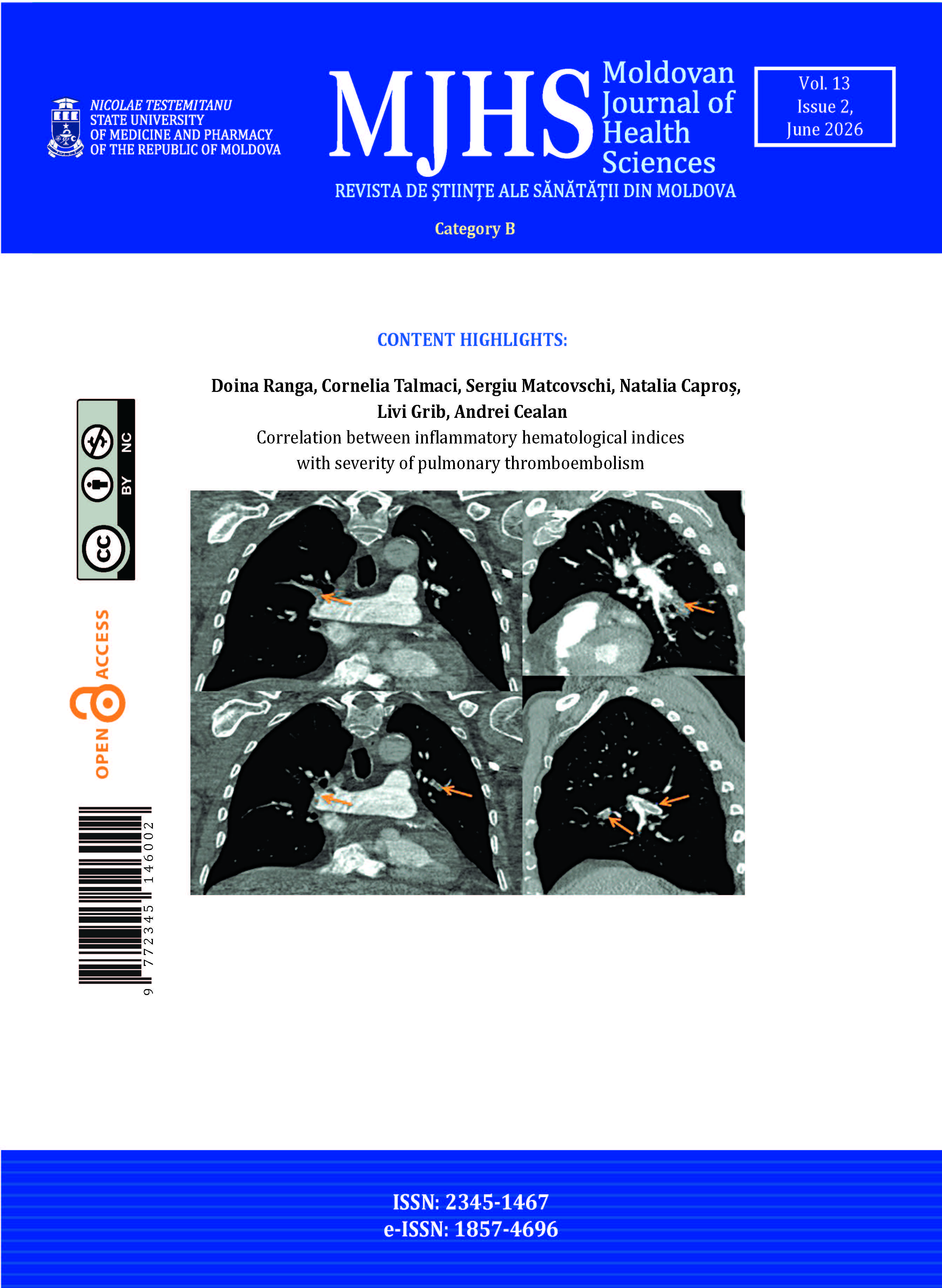
Cover Image

Volume 13, Issue 2, June 2026

Updated: 13.06.2026

Research

The spectrum of comorbidities in patients with heart failure with preserved ejection fraction

Irina Cabac-Pogorevici, Adriana Scalețchi*, Valeriu Revenco
https://doi.org/10.52645/MJHS.2026.2.01

Introduction

Heart failure with preserved ejection fraction (HFpEF) accounts for nearly half of all heart failure cases and is frequently associated with cardiovascular and metabolic comorbidities. The phenotype of HFpEF patients is heterogeneous, and the impact of comorbidities on prognosis, exercise capacity, and functional status remains insufficiently elucidated.
 

Objective

The study aimed to characterize the clinical, functional, and comorbidity profiles of patients with HFpEF and to assess their influence on functional status, prognosis, and treatment response.
 

Materials and methods

This was an observational, cross-sectional study including 206 patients with HFpEF (LVEF ≥50%) consecutively recruited from the General Cardiology Department of the Institute of Cardiology, aged ≥18 years, with an echocardiographically confirmed diagnosis. Demographic and anthropometric data, HFpEF etiology, hemodynamic biomarkers (NT-proBNP), functional status (NYHA), cardiovascular and non-cardiovascular comorbidities, and history of revascularization procedures (PCI, coronary bypass) were collected. Statistical analysis included descriptive statistics for continuous variables (mean ± SD, median, IQR), categorical variables (frequencies and percentages), and parametric/nonparametric tests for correlations and subgroup analyses, with statistical significance set at P < 0.05.

Results

The study population showed a typical overweight/obese profile, with arterial hypertension and chronic coronary artery disease as predominant mechanisms. Cardiovascular and metabolic comorbidities influenced exercise capacity, functional status, and treatment response, identifying distinct phenotypic subgroups with differential prognostic impact. Elevated NT-proBNP levels reflected increased ventricular filling pressures and functional heterogeneity, underscoring the need for individualized management.
 

Conclusions

HFpEF is associated with a complex clinical profile dominated by hypertension, coronary artery disease, and metabolic comorbidities. Detailed assessment of comorbidities and biomarkers allows patient phenotyping and personalized therapeutic management. A multidisciplinary approach is essential for optimizing prognosis, exercise capacity, and quality of life in patients with HFpEF.
View Article

Correlation between inflammatory hematological indices with severity of pulmonary thromboembolism

Doina Ranga1*, Cornelia Talmaci1, Sergiu Matcovschi1, Natalia Caproș1, Livi Grib2, Andrei Cealan3
https://doi.org/10.52645/MJHS.2026.2.02

Introduction

Pulmonary thromboembolism (PTE) is a major cardiovascular emergency associated with significant mortality. Systemic inflammation contributes to the pathogenesis of thrombosis and to disease severity, and hematological indices derived from the complete blood count, such as the neutrophil-to-lymphocyte ratio (NLR) and the platelet-to-lymphocyte ratio (PLR), have been proposed as prognostic predictors. 

Materials and methods

A prospective observational study was conducted on a cohort of 182 consecutively investigated patients at Holy Trinity Municipal Clinical Hospital and the Institute of Cardiology. The diagnosis of PTE was confirmed by CT pulmonary angiography. Clinical data, inflammatory hematological indices, echocardiographic parameters, and severity scores were analyzed during the course of inpatient care. The prognostic value of NLR and PLR was assessed using ROC curve analysis.

Results

Pulmonary thromboembolism was confirmed in 153 patients (84.1%, 95% CI [78.7, 89.4]). Elevated NLR was identified in 82 patients (45.1%; 95% CI [37.8, 52.3]), and elevated PLR in 89 patients (48.9%; 95% CI [41.6, 56.2]). Overall mortality was 17.0% (95% CI [11.6, 22.5]) (31 patients). Elevated NLR was present in 26 (14.3; 95% CI [9.2, 19.4]) of deceased patients (p<0.00001), while elevated PLR was present in 22 (12.1%; 95% CI [7.4, 16.8]) of deceased patients (p = 0.012). ROC analysis demonstrated that NLR has a very good predictive ability for mortality (AUC = 0.799), whereas PLR has good predictive ability (AUC = 0.715). Additionally, NLR was significantly correlated with severity according to the PESI score (AUC = 0.614; p = 0.0048). Echocardiography revealed right ventricular dysfunction in 80.2% (95% CI [74.4, 86.0]) of patients and reduced TAPSE in 57.7% (95% CI [50.5, 64.9]) of patients.

Conclusions

The neutrophil-to-lymphocyte ratio is an important prognostic marker of severity and mortality in pulmonary thromboembolism, with a predictive value superior to that of the platelet-to-lymphocyte ratio. Integrating inflammatory hematological indices with clinical scores and imaging assessment may improve risk stratification and the management of patients with pulmonary thromboembolism.

View Article

Impact of COVID-19 on chronic kidney disease progression: a prospective cohort study

Tatiana Răzlog1*, Eugeniu Russu1,2, Costina Groza1, Liliana Groppa2
https://doi.org/10.52645/MJHS.2026.2.04

Introduction

Chronic kidney disease and COVID-19 are both associated with significant morbidity. Patients with chronic kidney disease are at risk for severe COVID-19, and SARS-CoV-2 infection may accelerate CKD progression. This study aimed to compare renal outcomes in CKD patients with and without prior COVID-19 and to identify predictors of progression.

Materials and methods

We conducted a prospective cohort study of 280 pre-dialysis CKD patients (stages G2–G5), followed for 12 months. Of these, 140 had a history of COVID-19 (post-COVID group), and 140 had no such history (control group). Baseline assessments included renal function (eGFR, creatinine, urea), inflammatory markers (CRP, ferritin, LDH), hematologic indices (hemoglobin, leukocytes, platelets), and SF-36 quality of life scores. CKD progression was defined as a ≥30% eGFR decline or the initiation of dialysis. Analyses included group comparisons, correlations, logistic regression, and ROC curves.

Results

Baseline characteristics and mean eGFR (~60 mL/min/1.73 m²) were similar across groups. CRP and ferritin levels were elevated in both groups without significant differences. Post-COVID patients reported lower vitality and higher social functioning on SF-36 (both p < 0.001). After 12 months, the post-COVID group showed greater eGFR decline (–3.1 vs –1.2 mL/min) and a higher progression rate (28% vs 15%, p < 0.01). Multivariable analysis identified prior COVID-19 (adjusted OR ≈2.3, 95% CI: 1.3–4.0) and low baseline hemoglobin as independent predictors of progression; CRP and ferritin were not predictive. LDH showed a modest association. Hemoglobin alone predicted progression with an AUC of 0.78; the combined model (COVID status + hemoglobin) yielded an AUC of 0.85.

Conclusions

CKD patients with prior COVID-19 experienced a faster renal function decline over one year than those without COVID-19. Persistent anemia and elevated LDH were also associated with increased progression risk. These findings emphasize the importance of post-COVID renal monitoring and early intervention in CKD patients to prevent deterioration.

View Article

Clinical assessment of risk factors in traumatic brain injury

Natalia Mocanu1,2*, Larisa Rezneac1,2, Natalia Catanoi1,2, Tatiana Malacinschi-Codreanu1,2
https://doi.org/10.52645/MJHS.2026.2.05

Introduction

Traumatic brain injury remains a leading global health concern with significant social and economic impact. The main causes include traffic accidents, falls, and violence, especially affecting young adults. In the Republic of Moldova, TBI incidence is rising, particularly during the prehospital phase. TBI involves both primary and secondary brain injuries, the latter often resulting from hypoxia, hypotension, or hyperglycemia. These secondary insults critically influence outcomes and are associated with high mortality. Effective prehospital management – focused on stabilizing oxygenation and hemodynamics – is essential in reducing neurological deterioration. Emergency teams play a key role in preventing secondary injury and improving survival.

Materials and methods

This study, conducted from 2020 to 2024, analyzed 486 patients with acute traumatic brain injury (TBI) assessed in both prehospital and emergency department settings. It aimed to evaluate injury severity and prognosis using clinical tools and structured observation forms, developed specifically for this research.

Results

Significant correlations were found between increased age, low systolic blood pressure, prehospital hypoxia, and both TBI severity and mortality (p < 0.0001). While hyperglycemia was not significantly associated with injury severity, it showed a moderate negative correlation with mortality (p < 0.01). Findings emphasize the importance of early monitoring and stabilization of vital signs in the prehospital phase to improve TBI outcomes.

Conclusions

This study emphasizes the importance of systematic prehospital monitoring and management of physiological parameters to mitigate secondary brain injury and improve patient prognosis. Early intervention targeting hypoxia and hypotension remains vital in the acute management of TBI.

View Article

Clinical application of wide and extra-wide archwires in the treatment of dentoalveolar malocclusions

Mihaela Jarovlea-Bejenari1*, Oleg Solomon1, Oleg Arnaut2,3,4
https://doi.org/10.52645/MJHS.2026.2.06

Introduction

Aesthetic and functional considerations have always been the main concerns in the orthodontic treatment of dentoalveolar malocclusions. The objective of this study was to assess the effectiveness of the use of wide and extra-wide archwires in reducing treatment time, compared with conventional archwire therapy.

Materials and methods

A retrospective cohort study was performed. A total of 180 patients aged between 14 and 36 years old were enrolled and divided into two groups: a classical treatment group, including standard NiTi/SS archwires (n=100), and an alternative treatment group with wide and extra-wide CuNiTi/TA/TMA/SS archwires (n=80). The treatment period, estimated in months, was considered the primary outcome. As secondary outcomes, inter-canine, inter-premolar, and inter-molar widths were estimated.

Results

The duration of treatment in the Alternative group was 20.2 ± 4.4 months, with a median of 19.0 months (range: 12–38 months), while the Classic group showed a mean treatment duration of 28.9 ± 5.2 months, a median of 30.0 months (range: 14–39 months), with a mean difference of 8.7 months. Statistical analysis revealed a significant difference in treatment duration between the two protocols (Mann–Whitney U = 863, p < 0.001), with a large effect size (rrb = −0.78; 95% CI: −0.84 to −0.71), indicating practical relevance.

Regarding secondary outcomes, transverse maxillary measurements, including inter-canine, inter-premolar, and inter-molar widths, showed similar changes before and after treatment in both groups. The available data did not provide sufficient evidence to reject the null hypothesis about the differences between the groups for these parameters, with no clinically meaningful differences.

Conclusions

The application of wide and extra-wide archwires represents an effective orthodontic approach associated with reduced treatment duration, while preserving satisfactory occlusal stability and ensuring a favorable level of patient comfort.

View Article

The influence of stress factors on dioxoindolinone stability

Introduction

Stability studies for pharmaceutical products represent a primary stage in the development and manufacture of a new medicinal product, being a fundamental condition that guarantees its quality and efficacy. The research was initiated with the aim of the determining  the stability of Dioxoindolinone under stress conditions in order to find out the factors that can induce possible changes in the molecular structure of the Dioxoindolinone, which consequently can lead to a partial or total diminution of the therapeutic effect.

Materials and methods

In the experimental research, Dioxoindolinone was used, synthesized in the Organic Synthesis Laboratory of the Institute of Chemistry, at USM, (purity 99.9%). The following apparatus was used: analytical balance (OHAUS DV215 CD, Switzerland); spectrophotometer (Shimadzu UV-1800, Japan); a pair of quartz cuvettes with a layer thickness of 10 mm; ultraviolet lamp chamber (UV with CN-6 filter, France) for exposure to 254 nm and 365 nm radiation; thermostat (TC-80M-2, Ukraine) set at 60 ± 1°C; ultrasonic bath (Sapfir, St. Petersburg); reagents: analytical grade reagents – 0.1 M hydrochloric acid (HCl) (ChemLab, Belgium); 0.1 M sodium hydroxide (NaOH) (ChemLab, Belgium); 3% hydrogen peroxide solution (H2O2) (CentroChem, Poland); ethanol (96%) (CentroChem, Poland).

Results

The influence of stress factors, such as oxidants, acids, bases, humidity, high temperatures and UV irradiation on the stability of Dioxoindolinone was studied. Under conditions of oxidative, hydrolytic, thermal, acid-base, photolytic stress by the UV-Vis spectrophotometric method it was determined that the substance is stable to humidity and in the acidic environment. Dioxoindolinone degrades under the influence of oxidant, it was found to be unstable in the basic environment (a change in concentration was observed). The insignificant influence of UV light and high temperature was demonstrated.

Conclusions

The influence of stress factors on the stability of Dioxoindolinone was studied. The results obtained will be used to establish optimal storage conditions that will be introduced in the Quality Standardization Specification for Dioxoindolinone.

View Article

Evaluation of oxidant and antioxidant system markers in patients with pulmonary tuberculosis before and after hospital treatment

Marina Reabiseva1*, Valeriana Pantea2, Anatolie Visnevschi1
https://doi.org/10.52645/MJHS.2026.2.03

Introduction

Pulmonary tuberculosis remains a major cause of morbidity and mortality worldwide. According to data published by the World Health Organization in 2024, a total of 8.2 million people were newly diagnosed with TB in 2023, compared with 7.5 million in 2022, 7.1 million in 2019, and markedly higher than the 5.8 million and 6.4 million in 2020 and 2021, respectively.

Material and methods

The prospective study involved 59 participants before and after treatment: 11 women (18.6%) and 48 men (81.4%). The participants were divided into 2 groups: group L1 – patients with tuberculosis before treatment, and group L2 – patients with tuberculosis after treatment. Serum levels of nitric oxide, malondialdehyde, glutathione reductase, and total antioxidant activity were measured using a spectrophotometric method.

Results

In the study, we demonstrated that nitric oxide and malondialdehyde serum concentrations were non-significantly higher in the L2 group compared with the L1 group. Glutathione reductase activity showed a significant decrease in antioxidant activity in the L2 group, indicating reduced antioxidant capacity. Total antioxidant activity showed a non-significant decrease in the L1 group compared with the L2 group.

Conclusions

The results of the research demonstrated that the administered anti-tuberculosis treatment increased nitric oxide and malondialdehyde levels, and reduced glutathione reductase and total antioxidant activity. This phenomenon indicates the persistence of oxidative stress even after treatment. The levels of nitric oxide, malondialdehyde, glutathione reductase, and total antioxidant activity in patients with pulmonary tuberculosis may serve as biomarkers for monitoring disease progression.

View Article

Review

Proteases involved in distant posttraumatic lesions: a review of literature

Dan Croitoru1,2*, Ion Iachimovschi1, Oleg Arnaut3
https://doi.org/10.52645/MJHS.2026.2.08

Introduction

Inflammation is a state driven by pathogenic stimuli. Trauma is one of the causes of acute onset of the inflammatory pathway. Multiple proteases are capable of inducing distant multiple organ lesions (lungs, brain or spinal cord, heart, kidney, liver and systemic vessel endothelium). The onset of corresponding syndromes will complicate the clinical course of that particular patient. These molecules are potential biomarkers in trauma patients.

Materials and methods

There were reviewed the PubMed, Elsevier, ResearchGate, Google Scholar, Cochrane Library, medRxiv databases using the keywords “proteases”, “antiproteases” and “trauma”. A total of 114 relevant sources were included. An additional74 papers were selected. Overall there 188 literature sources were reviewed.

Results and discussions

There are six classes of proteases: aspartic, glutamic, metalloproteases, cysteine, serine, and threonine proteases of which the glutamic ones are not found in mammals. Multiple processes that involve protein degradation are the fundamental mechanisms through which they mediate tissue and organ destruction after trauma-mediated inflammation. Certain inhibitors of the aforementioned proteases are of importance in these processes – they are vital in the prevention of pathophysiological processes such as fibrosis, although in the case of trauma due to their depletion there is high activity of the proteases system. The release of the protease/antiprotease system is mediated through by leukocytes, thrombocytes, myocytes and endothelium.

Conclusions

In this literature review there was described a high variety of protease and antiproteases. There is an increased complexity for the potential treatment of the distant lesions, thus the necessity for symptomatic treatment is foremost in order to diminish the lesions of the acute phase.

View Article

Circadian rhythms in cardiovascular physiology and disease: extrinsic and intrinsic factors with implications for intensive care

Introduction

Circadian rhythms are endogenous, approximately 24-hour oscillations that coordinate nearly all physiological systems, including cardiovascular function. The suprachiasmatic nucleus serves as the central pacemaker, synchronizing peripheral clocks in the heart, vasculature, and kidneys to generate daily fluctuations in blood pressure, heart rate, endothelial function, coagulation, myocardial metabolism, and autonomic tone. Disruption of circadian organization – through extrinsic factors (shift work, irregular light exposure, altered feeding schedules) or intrinsic factors (aging, inflammation, genetic clock-gene variants) – has been strongly linked to increased cardiovascular morbidity and mortality.

Materials and methods

A bibliographic search was conducted in PubMed, Scopus, and Web of Science for English-language publications (2000–2025), focusing on the circadian rhythm, cardiovascular disease, hypertension, chronotherapy, and critical illness. Keywords included “circadian rhythm,” “cardiovascular disease,” “hypertension,” “chronotherapy,” and “intensive care.” Original research, clinical trials, meta-analyses, and experimental studies were eligible; studies addressing circadian blood pressure variability and its relation to outcomes in critically ill patients were specifically examined. Filters required full-text availability and publication dates from 2000 to 2025. The search yielded 276 full-text articles, of which 79 representative sources were selected for this narrative review.

Results

This review synthesizes current evidence demonstrating that circadian clocks regulate essential cardiovascular processes and that their disruption contributes to disease pathogenesis. Observational data on circadian blood pressure variability are discussed, showing that the attenuation of normal hemodynamic oscillations is associated with a worse prognosis. Particular attention is given to the extrinsic and intrinsic factors that modulate circadian alignment, with implications for the management of patients in intensive care.

View Article

Epilepsy-specific quality-of-life questionnaires and social stigma scales in adults with epilepsy: a methodological review

Gabriela Lișinschi-Baranov1, Stanislav Groppa2, Larisa Spinei3, Vitalie Ojovan4,5, Vitalie Chiosa2, Alina Ferdohleb3,5*
https://doi.org/10.52645/MJHS.2026.2.10

Introduction

Adult epilepsy generates a burden that extends beyond seizure counts and includes adverse treatment effects, role restriction, emotional distress, and the social devaluation attached to the diagnosis. The methodological problem is not the absence of patient-reported measures, but the heterogeneity with which disease-specific quality-of-life and stigma instruments are selected, interpreted, and combined in adult studies.

Materials and methods

A structured narrative methodological review was conducted using PubMed/MEDLINE, Scopus, Web of Science, Embase, Cochrane Library, and the institutional repository of the Nicolae Testemițanu State University of Medicine and Pharmacy. The synthesis focused on the Quality of Life in Epilepsy Inventory family, especially the 89-, 31-, 31-P, and 10-item forms, the adolescent 48-item comparator, and adult epilepsy stigma measures such as the Epilepsy Stigma Scale (ESS) variants, the Stigma Scale of Epilepsy (SSE), and the Epilepsy Self-Stigma Scale (ESSS). Special attention was given to publications from the Republic of Moldova and Romania because regional evidence is sparse but clinically relevant.

Results

QOLIE-31 emerged as the most defensible adult comparative instrument because it balances breadth, feasibility, and international comparability. QOLIE-31-P was particularly useful for patient-centred and real-world designs, while QOLIE-10 served primarily as a screening instrument and QOLIE-89 retained value for comprehensive psychometric work. The 48-item version was methodologically informative but remained adolescent-oriented rather than a primary adult endpoint. Across the stigma literature, ESS, SSE, and ESSS were clearly not interchangeable because they capture overlapping but distinct constructs, including perceived stigma, felt stigma, and internalized self-stigma.

Conclusions

The working hypothesis was supported across international, regional, and Moldovan sources: the greater the clinical and psychosocial severity of epilepsy, the lower the epilepsy-specific quality of life. Seizure frequency, uncontrolled or drug-resistant epilepsy, polytherapy, adverse medication effects, depression, anxiety, and stigma were the most recurrent determinants of lower scores. For adult studies intended for Moldovan settings and the MJHS submission, QOLIE-31 or QOLIE-31-P, combined with one clearly defined stigma scale and a standardized set of severity variables, offers the strongest methodological balance.

View Article

Follicular lymphoma and its transformation to diffuse large B-cell lymphoma - a brief introduction to disease biology

Ivan Negara1*, Oleg Arnaut1,2,3, Sanda Buruiana4
https://doi.org/10.52645/MJHS.2026.2.11

Introduction

Follicular lymphoma (FL) is a slow-growing B-cell lymphoma with a generally favorable prognosis. Nevertheless, its clinical course is heterogeneous, with a significant subset of patients experiencing early progression or histological transformation into diffuse large B-cell lymphoma (DLBCL), both considered to be high-risk events associated with treatment resistance and markedly inferior outcomes. Importantly, clinical risk factors have limited value in predicting these complications. This review outlines the key biologic features of FL, discussing how the novel molecular biology approaches can explain the clinical heterogeneity and high-risk disease evolution of FL.

Materials and methods

A focused literature review was conducted using the PubMed/MEDLINE database to identify studies on follicular lymphoma and its histological transformation to diffuse large B-cell lymphoma. Priority was given to original research or review articles investigating genetic, epigenetic, transcriptional, or microenvironmental determinants of FL.

Results

Evidence from early cytogenetic and DNA sequencing studies established BCL2 deregulation as an initiating lesion in FL, with further genetic alterations in epigenetic regulators like KMT2D, EZH2, CREBBP/EP300 occurring early on and persisting throughout the disease course. Studies of transformed FL samples indicate that aggressive evolution is associated with acquisition of additional genetic lesions, such as those affecting the cell cycle regulators CDKN2A/2B and TP53. More recently, integrated genomic, transcriptomic and spatial resolved techniques have demonstrated substantial transcriptional heterogeneity within individual genetic subclones, suggesting that the genotype alone does not determine the phenotype of the malignant cells and supporting a pathogenetic model in which clinical trajectories reflect the combined effects of genomic evolution, transcriptional cell state, and tumor-microenvironment crosstalk. Important findings, including greater infiltration with LAG3+CD8+ T cells in cases of histological transformation to DLBCL and upregulation of transcriptional programs that promote stromal expansion and B-cell receptor signaling in cases of early FL relapse, indicate that integrated profiling represents a promising avenue for identifying the biomarkers and treatment targets that are specific to high-risk disease.

Conclusions

Continued research concentrated on multiomic profiling of both malignant and non-malignant tumor compartments is essential in order to reveal the mechanisms of FL heterogeneity and translate these data into practical biomarkers and therapeutic strategies. 

View Article

Tick-borne mix infection diagnosis, challenges, and current practices

Olga Sofronie*, Greta Balan
https://doi.org/10.52645/MJHS.2026.2.12

Introduction

Tick-borne infections (TBIs) are increasingly recognized as a public health concern in North America and Europe, with Lyme disease being the most notable. The Centers for Disease Control and Prevention (CDC) acknowledges that official statistics likely underestimate the true incidence of TBIs due to diagnostic challenges and underreporting. Co-infections, where multiple pathogens are transmitted through a single tick bite or multiple bites, complicate diagnosis and treatment, leading to more severe symptoms and longer illness durations. Studies indicate a significant percentage of Lyme disease patients also have co-infections, with babesiosis being a common co-infection. 

Materials and methods

A comprehensive narrative literature review was conducted using PubMed and Scopus, resulting in 52 manuscripts. Additional reports from the CDC and European Centre for Disease Prevention and Control (ECDC), as well as relevant academic books, were included to meet the study's objectives. The Elicit platform was utilized to enhance reference identification and information synthesis.

Results

The paper provides an overview of tick-borne co-infections, emphasizing the diagnostic challenges posed by overlapping and nonspecific symptoms. It discusses various diseases, including Lyme disease, babesiosis, anaplasmosis, ehrlichiosis, Rocky Mountain spotted fever, and tick-borne encephalitis, detailing their causative organisms, vectors, clinical features, and common co-infections. The review critically examines diagnostic methods such as serological tests, molecular tests, and blood smears, highlighting issues like the „window period” false negatives/positives, and differentiating active from past infections. It also explores emerging technologies and biomarkers, including multiplex assays and next-generation sequencing, which enhance detection capabilities but face challenges in data analysis and standardization. 

Conclusions

Accurate diagnosis is crucial to manage these infections effectively, particularly in vulnerable populations. The rise in co-infections and inadequate testing presents a significant public health challenge, necessitating improved surveillance and diagnostic approaches.

View Article

Healthcare-associated bloodstream infections in children: epidemiology, risk factors and prevention strategies

Introduction

Health care-associated bloodstream infections represent a major public health concern, significantly impacting morbidity, mortality, and the overall cost of pediatric medical care.

Materials and methods

A literature review was conducted based on systematic searches in PubMed, SCOPUS, and Web of Science, following PRISMA guidelines.

Results

The incidence of healthcare-associated bloodstream infections ranges from 2 to 25 cases per 1,000 central venous catheter days, with higher rates reported in pediatric and neonatal intensive care units, where patients are frequently exposed to risk factors such as central venous catheter use, mechanical ventilation, and immunosuppression. Pediatric patients with health care-associated bloodstream infections experience significantly longer hospital stays compared to those without infection (25 vs. 7 days, P < 0.0001). In pediatric intensive care units, the average length of hospital stay due to these infections varies between 11.40 and 21.10 days, while in neonatal intensive care units, it ranges from 4 to 27.80 days. Mortality associated with these infections among children varies between 15% and 50%, depending on the severity of infection and underlying comorbidities. Additionally, health care-associated bloodstream infections lead to increased use of medical resources and generate substantial additional costs for the healthcare system-costs that are, in fact, largely preventable.

Conclusions

Evidence-based strategies, such as strict hand hygiene and standardized protocols for medical device use, can significantly reduce the incidence of these infections.

View Article

Case study

Non-immune fetal hydrops and intestinal obstruction: rare manifestations of congenital syphilis

Anastasia Neagu*, Larisa Crivceanscaia
https://doi.org/10.52645/MJHS.2026.2.14

Introduction

Fetal hydrops is defined as the pathological accumulation of extracellular fluid in at least two fetal anatomical compartments, including skin edema (> 5 mm thickness), pericardial effusion, pleural effusion, and ascites. Non-immune fetal hydrops (NIHF) accounts for over 90% of all fetal hydrops cases and has a heterogeneous etiology. Congenital infections contribute to approximately 6–7% of NIHF cases and are associated with a severe neonatal prognosis.

Case presentation

A preterm newborn was delivered from a pregnancy complicated by untreated maternal primary syphilis. The fetus had been diagnosed antenatally with NIHF, heart failure, and massive ascites. Postnatally, the infant required early ascitic drainage and subsequently underwent surgery for congenital intestinal obstruction in the context of ileal stenosis. Neonatal serological testing revealed a positive rapid plasma reagin (RPR) and a reactive Treponema pallidum Hemagglutination Assay (TPHA). Management of congenital syphilis was carried out according to the standardized national clinical protocol. The collected data were compared with those reported in the existing literature to assess clinical significance.

Results

The neonate showed a favorable clinical evolution following multidisciplinary management, including intensive care support, anti-infective therapy, and surgical correction of the intestinal obstruction. Progressive improvement allowed successful postoperative recovery and discharge in satisfactory condition.

Conclusions

Early identification of the infectious etiology of fetal hydrops is essential for the implementation of appropriate management and the improvement of neonatal outcomes. Close collaboration between maternal–fetal medicine, neonatology, and pediatric surgery is crucial in managing such complex cases.

View Article